Module 01 · Week 1 · What exactly is Web3?
Welcome to Web3
- Web1, Web2, Web3
- Centralised vs decentralised
- Digital ownership
- Myths and misconceptions
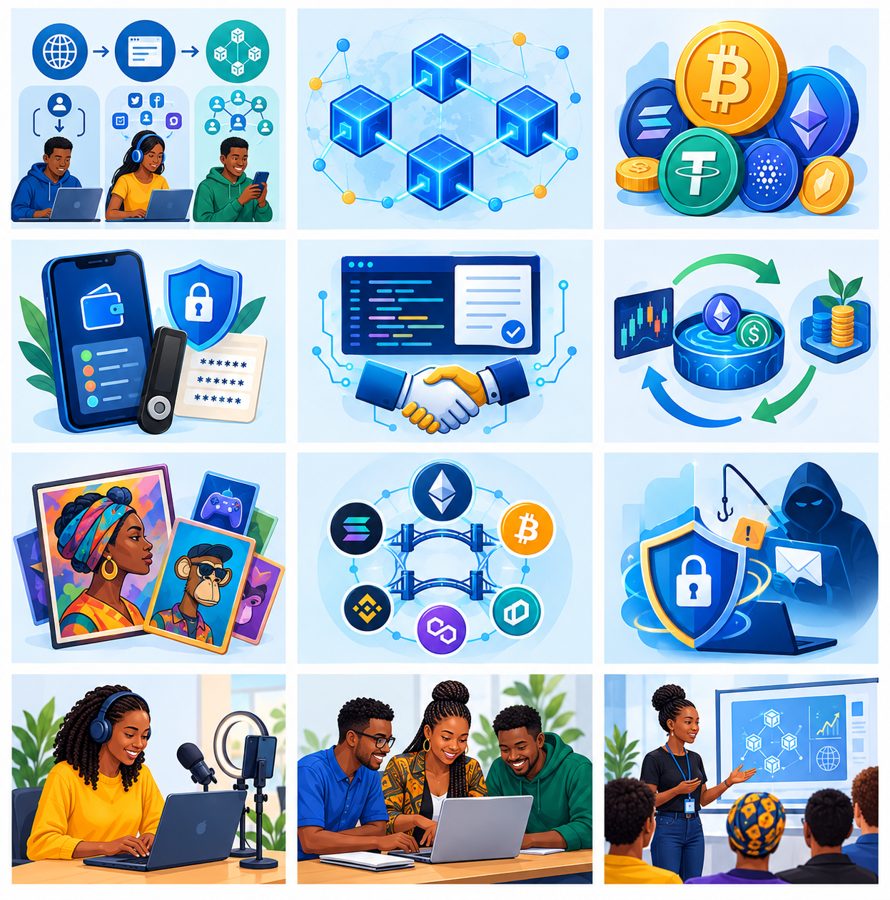
Web1 is commonly described as a read-focused internet. Web2 introduced interactive platforms where people create and share content. Web3 emphasises blockchain-based applications, digital assets and participation through decentralised systems.
Centralised systems are controlled by a central organisation. Decentralised systems distribute some control among many participants.
ExampleOn a conventional social platform, a company controls the rules and your account. A blockchain application may let you connect a wallet and interact with shared network records.
RememberWeb3 does not automatically mean every application is decentralised, or that users control everything.
Practical activityList the apps you use every day and discuss who controls your account, your content and your digital assets on each.
Module 02 · Week 1 · The technology behind Web3
Understanding Blockchain
- Blocks and transactions
- Cryptographic hashes
- Distributed ledgers
- Public vs private chains
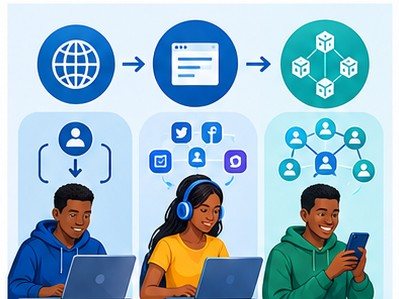
A blockchain is a ledger shared across a network. Transactions are grouped into blocks, and cryptographic hashes link the blocks and reveal changes to recorded data. Network participants follow shared rules to validate transactions.
Because copies of the ledger are kept by many participants, changing an established record is difficult: the network rules and cryptographic links expose it.
ExampleImagine a class record book copied by several students. If someone changes an old entry in only one copy, the other copies reveal the difference.
RememberBlockchains make unauthorised changes difficult, but they are not automatically error-free or immune to attacks.
Practical activityBuild a paper blockchain with numbered blocks, then show what happens when someone tries to change an earlier record.
Module 03 · Week 2 · Understanding digital assets
Cryptocurrency, Coins and Tokens
- Bitcoin and altcoins
- Coins vs tokens
- Stablecoins
- Utility and governance tokens
- Market cap and volatility
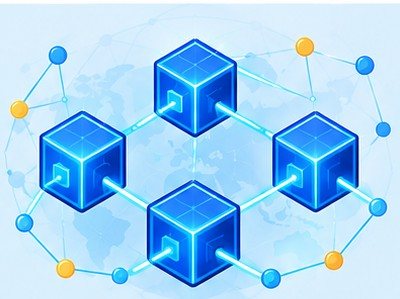
Cryptocurrency is a digital asset that uses cryptography and blockchain or related networks. Bitcoin was designed for peer-to-peer digital payments without a central payment operator.
A coin is usually the native asset of a blockchain; a token is created on an existing blockchain. Stablecoins aim to hold a steady value, often against a currency. Utility tokens give access to a product or service, and governance tokens may give holders a vote on project decisions.
ExampleA network may use its native coin for transaction fees, while an app on that network issues a separate token for membership or voting.
RememberStablecoins can lose their peg. Market capitalisation is roughly price × circulating supply, and crypto prices can swing sharply.
Practical activitySort a list of sample digital assets by their purpose (payment, stable value, utility, governance) without buying anything.
Module 04 · Week 2 · Your first step into digital ownership
Crypto Wallets and Seed Phrases
- Hot vs cold wallets
- Custodial vs self-custody
- Public address
- Private key
- Seed phrase
- Network fees
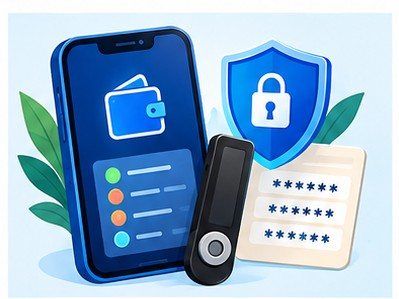
A wallet is a tool for managing keys and interacting with digital assets. Your public address can be shared to receive assets. Your private key authorises transactions, and your seed phrase can restore access to the wallet.
Hot wallets are connected to the internet; cold wallets keep keys offline. With a custodial wallet a provider holds the keys; with self-custody you hold them yourself.
ExampleGive a friend your public address so they can send you a supported asset. Never give anyone your private key or seed phrase.
RememberCheck the network, the destination address and the fee before sending. A transfer on the wrong network or to the wrong address can be impossible to reverse.
Practical activityExplore a wallet interface with a demo or testnet wallet. Nobody should ever be asked to reveal a real seed phrase or private key.
Module 05 · Week 3 · How blockchain applications work
Smart Contracts and dApps
- Smart contracts
- dApps
- Wallet connections
- Permissions and approvals
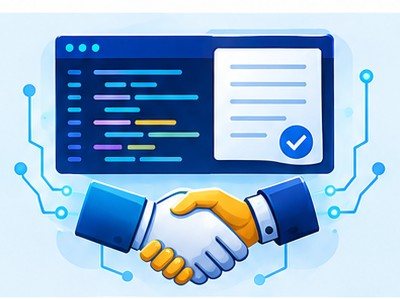
A smart contract is a program deployed on a blockchain that runs according to programmed rules. A decentralised application (dApp) uses blockchain functionality as part of how it works.
Connecting your wallet lets an app request information or ask you to approve transactions. An approval can authorise a contract to access or move certain assets.
ExampleA ticketing contract issues a digital ticket automatically once it receives a valid payment.
RememberSmart contracts can contain bugs. A wallet connection or approval is not automatically safe: read what you are signing.
Practical activityDesign a simple digital agreement that releases a reward when a clearly defined condition is met.
Module 06 · Week 3 · Financial services on blockchain
Decentralised Finance (DeFi)
- CeFi vs DeFi
- CEX vs DEX
- Liquidity pools and swaps
- Lending, staking, yield farming
- Gas, slippage, impermanent loss
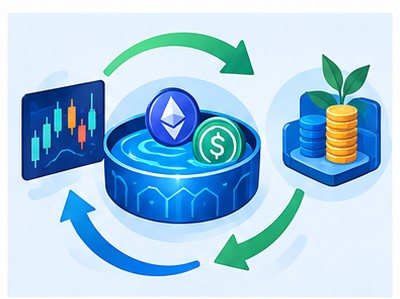
DeFi uses blockchain applications to provide financial functions. A centralised exchange (CEX) is run by a company; a decentralised exchange (DEX) typically uses smart contracts to facilitate trades.
A liquidity pool is a set of assets deposited into a smart contract to support trading. A swap exchanges one asset for another and costs a gas fee. Slippage is the gap between the price you expect and the price you get. Liquidity providers can face impermanent loss when the prices of pooled assets move apart.
ExampleFollow a sample token swap on a testnet and spot its estimated fee, the approvals it needs and the possible slippage.
RememberReturns are never guaranteed. Risks include contract exploits, liquidity problems and outright losses.
Practical activityTrace a sample swap on a block explorer or testnet and list every fee, approval and risk you can identify.
Module 07 · Week 4 · More than digital pictures
NFTs, Digital Ownership and Gaming
- Non-fungible tokens
- Collectibles and memberships
- Tickets and gaming assets
- Royalties and licensing
- Ownership limits
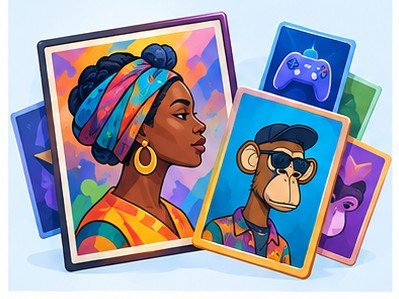
An NFT is a distinct blockchain token that can represent a specific digital or physical item, or a claim related to it. Unlike coins, each NFT has its own identity and is not interchangeable.
Owning an NFT does not automatically mean owning the copyright or having unlimited rights to use the artwork. Your rights depend on the terms attached and the law.
ExampleA creator issues NFT membership cards that give holders access to a community event.
RememberCheck what an NFT actually grants, where its content is stored, and what licence applies.
Practical activityDesign an NFT membership-card concept for a community, a creator or a local business.
Module 08 · Week 4 · Understanding different blockchains
Blockchain Networks and Ecosystems
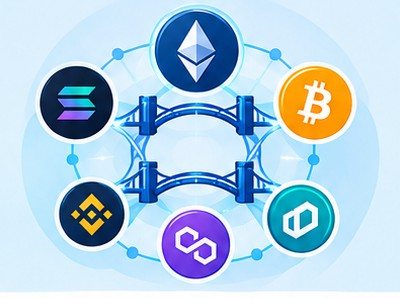
- Bitcoin, Ethereum, Solana, Stellar, Dogecoin
- Layer 1 vs Layer 2
- Speed, cost and security trade-offs
- Bridges and interoperability
- Block explorers
Different blockchains use different designs and rules. A Layer 1 is a base blockchain; Layer 2 systems work on top of a base network to improve capacity or cost.
Interoperability is about different systems working together; bridges move assets or information between networks. A block explorer lets anyone inspect public blockchain data.
ExampleSearch a transaction on a public block explorer and read its status, destination address, fee and block.
RememberEvery network trades off speed, fees, security and decentralisation. Bridges add extra risk.
Practical activityCompare two networks on public block explorers and inspect their transaction details, fees and activity.
Module 09 · Week 5 · Protect yourself before exploring
Security, Scams and Risk Management
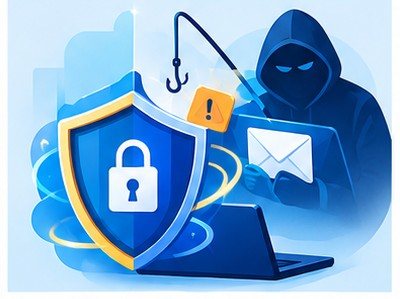
- Phishing and fake websites
- Impersonation
- Fake airdrops and giveaways
- Malicious approvals
- Rug pulls
Scammers imitate trusted projects, offer fake rewards, send suspicious links and pressure people to act fast. A rug pull is when a project is abandoned or used deceptively in a way that harms participants.
Verify websites and social accounts yourself, review wallet permissions, secure your accounts, and never act under pressure.
ExampleA message offers free tokens but asks for your recovery phrase. That is a major warning sign: real support never needs your seed phrase.
RememberIf it promises guaranteed profit, demands urgency, or asks for secrets, stop and verify.
Practical activityReview a set of simulated scam messages and point out every red flag before interacting.

Module 10 · Week 5 · Turning knowledge into useful skills
Web3 Careers and Creator Opportunities
- Community management
- Content and storytelling
- Research and design
- Partnerships and ambassadors
- Freelancing and portfolios
Web3 projects need more than programmers. They need people who explain concepts, support users, run and moderate communities, research projects, design, and communicate with audiences.
Business development, education, support and development roles are all open to people who can show real, verifiable work.
ExampleBuild a portfolio of educational posts that explain blockchain terms, and practise moderating a community with clear guidelines. (This is exactly what BMA interns do.)
RememberFocus on skills you can demonstrate and credible work samples, not promises of quick income or token rewards.
Practical activityCreate a beginner Web3 profile and pick three roles or skills to develop next.

Module 11 · Week 6 · From learning to contributing
Building in Web3 and Finding Opportunities
- Researching projects
- Reading documentation
- GitHub and open source
- Hackathons, grants, bounties
- Personal branding and networking
Before contributing to a project, research the problem it solves, read its documentation, confirm its official channels and judge whether its claims are credible.
Open-source software lets others use and contribute to the code under a licence. Hackathons are events where people build and present projects; grants fund eligible work; bounties reward a defined task.
ExampleResearch a project, identify who it's for, verify its official website, and propose one improvement to its documentation.
RememberOpportunities can be competitive, conditional or fraudulent. Check eligibility and terms before sharing information or doing work.
Practical activityResearch one project, explain the problem it solves, verify its official channels and present one way you could contribute.

Module 12 · Week 6 · Put your knowledge into practice
Graduation and Your First Web3 Project
- Concept review
- Real-world use cases
- Project presentation
- Risk assessment
- 30-day learning roadmap
The final module brings everything together. You explain a real-world use case, present a small project or initiative, identify its risks and decide what to learn next.
ExamplePropose a community event ticketing system: who it serves, why blockchain helps, its limitations and its security concerns.
RememberA good beginner project shows understanding and responsible research, not how much crypto you own.
Practical activityPresent your final project: what you learned, the risks you considered, and your personal 30-day roadmap.